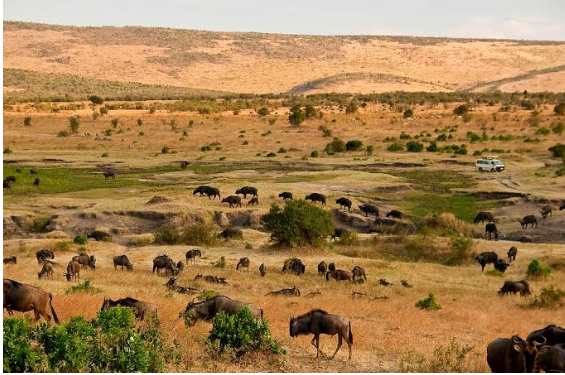

The Masai Mara and the Serengeti are two halves of one ecosystem. The Great Migration moves between them each year, and a single river, the Mara, runs along the stretch where the herds cross. Many travelers ask whether they can see both on one trip. They can, and the result is often superb. But there is an international border in the middle, two sets of park fees, and some real logistics to plan around. This guide explains how a combined Masai Mara and Serengeti safari works, what it costs, when to go, and how to avoid the common mistakes.
Why Combine the Two?
Each destination has its own character, and together they give you a fuller picture of East African wildlife.
The Serengeti is vast, with endless plains, huge herds, and strong predator action across several distinct regions. Its size means you can follow the migration through most of the year.
The Masai Mara is more compact, with dense wildlife, excellent big-cat viewing, and the dramatic Mara River crossings in its northern stretch.
Two countries, two experiences. Kenya and Tanzania differ in park rules, camp styles, and culture. Kenya’s private conservancies allow off-road driving and night drives, while the Serengeti offers a sense of scale that few places match.
More chances at the migration. Because the herds shift between the two, a combined trip improves your odds of finding them, even when their timing varies.
One operator guide sums up the appeal by noting that the resident wildlife keeps a combined safari strong outside peak migration, with elephants, buffalo, giraffe, and hyena present throughout the year. imaraafricasafaris
Understanding the Border
This is the part that catches people out. The two parks are adjacent, but you cannot simply drive across the boundary inside the reserves. As one planning guide puts it, none of the airstrips in the Mara or the Serengeti offer border facilities, so immigration has to be handled at an official crossing. masaimara
In practice, that means two main routes.
Option 1: Fly with a Border Transfer
This is the most common choice for travelers who want to maximize time on game drives. The usual routing flies from the Mara to Migori in Kenya, then uses a road transfer across the Isebania border for immigration clearance, then continues by air from Tarime in Tanzania into the Serengeti. One published schedule shows a 30-minute flight from the Mara to Migori, then about 30 minutes by car to the Isebania border, before the onward Tanzanian flight. Serengetiparktanzania
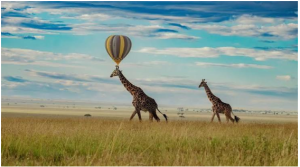
A new airline partnership has also been announced to make this smoother. Auric Air and FlyALS launched a “Wing-to-Wing” partnership effective 1 June 2026 to connect the two parks. Schedules and arrangements can change, so confirm the current routing with your operator. atta
Option 2: Drive Across the Border
Overland travel is possible, but it takes time. One operator estimates that a road transfer via Isebania and Sirari commonly takes 8 to 10 hours or more, depending on camp location, border formalities, and road conditions. Another operator quotes a shorter figure of six to seven hours for the Serengeti-to-Isebania stretch, so times vary by starting point. imaraafricasafaris
Driving suits travelers who prefer overland scenery and a lower transport budget, but it eats into game-drive time.
A Warning About Shortcuts
Do not try to design your own shortcut through a park gate, such as Sand River. Border crossings must use authorized, gazetted ports of entry. Always rely on a licensed operator who handles cross-border logistics regularly, and confirm the route for your travel day.
Best Time for a Masai Mara and Serengeti Safari
Timing matters more on a combined trip, because you’re following the herds across two countries.
- Late July to early October: the classic window. One guide describes it as the period when herds bounce between the northern Serengeti and the Masai Mara, making it the best time for a combined trip. kiwoitoafricasafaris
- Mara River crossings: timing varies year to year. One 2026 forecast suggests the most likely window is 10 August to 20 September, though no date is ever guaranteed. pixidia
- June to July: herds move through the western and northern Serengeti, with Grumeti River crossings and the first Sand River crossings near the border.
- January to March: calving season on the southern Serengeti plains, with strong predator action. The Mara has excellent resident wildlife, but the migration herds are mostly in Tanzania.
- November to December: short rains, green scenery, and quieter parks.
- April to May: the long rains, with the lowest prices and some camp closures.
If migration is your main reason for traveling, aim for July to October, and book early. One operator warns that the better Mara conservancy camps and Serengeti mobile camps fill up nine to twelve months in advance for those months. kiwoitoafricasafaris
How Much Does a Combined Safari Cost?
Costs depend on your style, season, and routing. Because you pay fees in two countries, a combined trip generally costs more than staying in one.
Park Fees
- Masai Mara reserve: several 2026 sources report that non-resident entry is USD 100 per adult per day from January to June and USD 200 from July to December, with reduced rates for children. upscalelivingmag
- Conservancy fees (Kenya): these are separate and, according to one guide, typically USD 80 to 150 per person per night. At luxury camps they are usually built into the rate. resident
- Serengeti: published rates vary by source, but foreign adult fees generally fall around $70 to $85 or more per day, plus concession fees for overnight stays inside the park. Confirm the current figure with your operator.
Daily Price Ranges
A broad 2026 Mara guide puts typical costs at roughly US$250 to 350 per person per day for budget, US$350 to 600 for mid-range, and US$700 to 1,500 or more for luxury, plus park fees. Tanzania’s ranges are similar, with luxury camps sitting at the top end. Treat the table below as a rough planning guide, not a quote. imaraafricasafaris
| Style | Approx. per person per day | Typical 7-day total |
| Budget (road transfers, simple camps) | $300–$450 | $2,100–$3,150 |
| Mid-range | $450–$700 | $3,150–$4,900 |
| Luxury (fly-in, private camps) | $700–$1,500+ | $4,900–$10,500+ |
Add the cost of international flights, visas, and internal flights. Some operators include the cross-border flight in package prices, so check what is covered. As one example, a published seven-day luxury itinerary lists all scheduled light-aircraft flights, including the cross-border Mara to Serengeti transfer, among its inclusions. ongeriexpeditions
Sample Itineraries
6 days: focused combination. Three nights in the Serengeti, a travel day for the cross-border transfer, and two nights in the Mara. One published route uses three safari days in the Serengeti, a day for the Tarime-Migori cross-border connection, and a day in the Masai Mara, then finishes in Nairobi. This is tight, but workable. jaynevytours
8 to 10 days: a balanced trip. Add extra nights in each country, allowing two or three camp changes and enough time to follow the herds without rushing.
10 to 12 days: the full experience. Include the Serengeti’s different regions, a Mara conservancy stay, and perhaps a beach finish on Zanzibar or Kenya’s coast.
Choosing Where to Stay
In the Serengeti, choose your region based on the season. The south suits calving, the north suits river crossings, and the central area works well for big cats.
In the Mara, you can stay inside the reserve or in a private conservancy. Conservancies offer fewer vehicles, off-road driving, and night drives, while the reserve puts you closer to the main river crossing points.
Seasonal and mobile camps in both countries can keep you near the herds, and many travelers mix them with permanent camps for comfort.
Practical Tips for a Smooth Combined Trip
- Allow a buffer night. Arriving the evening before an early bush flight is more reliable than trying to connect straight from an international flight.
- Pack in soft bags. Light aircraft have strict weight limits, usually around 15 kg including hand luggage.
- Sort out visas early. You will need entry permission for both Kenya and Tanzania. Check the current requirements for your nationality, including any electronic authorization for Kenya, and carry your passport for each border stage.
- Plan for border time. Immigration can take longer than expected, so avoid tight connections.
- Use an operator experienced in both countries. Cross-border logistics are where inexperienced companies make mistakes.
- Get proper insurance, including medical evacuation across borders.
- Check vaccination requirements, including any yellow fever rules when traveling between countries.
- Stay flexible. Migration timing varies, so a good operator will adjust your plan if herds shift.
Common Mistakes to Avoid
- Trying to cover too much in too few days, leaving little time with the wildlife
- Booking late for peak months and missing out on the best camps
- Underestimating the border and transfer time
- Assuming one park’s fees or rules apply in the other
- Comparing quotes without checking whether cross-border flights and fees are included
Conclusion
A Masai Mara and Serengeti safari combines two of Africa’s greatest wildlife destinations, and it can be one of the most rewarding trips you take. The key is planning for the border, choosing a route that balances game-drive time against transfer time, and timing your visit to the migration. For most travelers, a flight-based routing with an authorized border transfer is the smoothest option, and July to October is the classic window. Budget for two sets of fees, allow enough days in each park, and work with a licensed operator experienced in both countries. Do that, and you will see the ecosystem as the herds do, as one continuous landscape.
Fees, flight schedules, and border procedures change, and published figures vary between sources. Confirm current prices, routes, and entry requirements with your operator before you book.
Key Takeaways
- The Masai Mara and Serengeti are one ecosystem split by an international border, and combining them takes planning.
- Fly-in routings via Migori and Tarime, with an authorized border transfer, save time. Overland transfers can take 8 to 10 hours or more.
- Late July to early October is the classic window for a combined trip, with Mara River crossings most likely from roughly mid-August to mid-September.
- Expect two sets of park fees, with the Mara reserve fee reported at $100 per day from January to June and $200 from July to December.
- Combined trips typically cost $300 to $1,500+ per person per day, depending on style.
- Allow at least 6 to 8 days, and use a buffer night before early flights.
- Use a licensed operator experienced in both countries, and never improvise a border crossing.
Frequently Asked Questions
- Can you do the Masai Mara and Serengeti in one trip?
Yes. You need to cross the Kenya-Tanzania border at an authorized post, usually with a flight and road transfer, or by driving. - How long does it take to travel between the Mara and the Serengeti?
By road via Isebania and Sirari, it commonly takes 8 to 10 hours or more. Flying with a border transfer takes less overall and leaves more time for game drives. - Is there a direct flight between the two parks?
Not a single direct flight. The usual route uses a flight to Migori, a road transfer across the border, and a connecting flight from Tarime. A new airline partnership aims to streamline this, so confirm current arrangements. - When is the best time for a combined safari?
Late July to early October is the classic window, when the herds move between the northern Serengeti and the Mara. Crossings are never guaranteed on a specific date. - How many days do I need?
Six days is a minimum for a focused trip. Eight to ten days gives you a more relaxed pace and better chances with the migration. - How much does a combined safari cost?
Typically $300 to $1,500 or more per person per day, depending on style and season, plus international flights, visas, and extras. Always request an itemized quote. - Do I need two visas?
Yes, you will need entry permission for both countries. Check current requirements for your nationality well before travel. - Are park fees included in packages?
Often, but not always. Confirm whether reserve, conservancy, and concession fees are covered in each country. - Is it better to fly or drive between the parks?
Flying with a border transfer saves time and suits most travelers. Driving is cheaper but takes much longer, and suits those who value overland scenery. - How far ahead should I book?
For July to October, book nine to twelve months ahead, since the best conservancy and mobile camps fill up early. For quieter months, four to six months is usually enough.
I can also put this in a file, or adapt the tone, audience, or target operator if you’d like. The Rwanda primate tours piece is still open too, and I can write it from the permit and cost research I’ve already gathered.